

How Much Does a Parking Guidance System Cost in 2026?
For airports, hospitals, universities, municipalities, hotels, event venues, and commercial properties, parking guidance system cost depends on more than stall count. Detection technology, signage, networking, electrical work, software, integrations, accuracy requirements, and parking occupancy management all shape the budget.
That is why choosing the right parking guidance system starts with defining the operational problem. An automated parking guidance system for garage-level counts will cost less than a multi-structure deployment with space-level monitoring, license plate recognition, digital signs, and a connected parking lot tracking system.
What Does a Parking Guidance System Cost in 2026?
There is no universal answer. Public parking projects show just how much costs can vary based on the size of the facility, the technology being installed, and the overall project scope.
For a smaller parking-structure example, the City of San José approved a garage-level space-counting system for the Market Street/San Pedro Square Garage, which has approximately 1,385 parking spaces. The original five-year agreement for hardware, software, professional services, maintenance, and support had a maximum value of $381,224. In 2025, the city recommended extending the existing system through 2030, bringing the cumulative contract amount to $675,849.
Larger and more complex facilities can require substantially larger investments. Sacramento County, for example, lists a $4.5 million estimated project cost for an airport parking guidance project, while Orlando International Airport has undertaken an automated parking guidance project across multiple garages with a contract value exceeding $11 million.
These figures are not standard prices for every facility. Instead, they demonstrate why parking guidance system installation cost can vary significantly depending on size, infrastructure, technology, and scope. A single parking structure with strategically positioned cameras and signs is very different from an airport installation involving multiple garages and thousands of monitored spaces.
EnSight Technologies has also noted that traditional over-the-space sensor systems can cost roughly $500 to $1,000 per parking space once infrastructure and signage are considered. Camera-based systems can reduce hardware requirements because strategically positioned cameras may monitor multiple vehicle movements or parking areas.
What Drives the Cost of a Parking Guidance System?
1. Facility size and required detail
A 400-space garage and a 5,000-space campus require very different system designs. Entrances, ramps, blind corners, separate structures, outdoor areas, and specialty parking spaces can all add complexity.
Parking capacity management requirements are equally important. Some properties only need building- or level-level availability, while others require individual-space information. More detailed parking occupancy management typically requires additional devices, signage, networking, and configuration.
The parking lot tracking system should therefore match the decisions drivers and facility operators actually need to make.
2. Cameras vs. parking occupancy sensors
Technology selection directly affects overall cost. Parking occupancy sensors typically require a device at each monitored parking stall. They can provide precise individual-space status, but hardware quantities increase quickly as facilities grow.
Vision-based parking management technology can monitor larger areas with fewer field devices. EnSight Technologies states that its camera-based platform delivers greater than 99% counting accuracy while reducing the need for costly and complicated infrastructure.
For many properties, flexible parking systems can combine both approaches. Cameras may handle general parking capacity management, while individual sensors are reserved for accessible parking, EV charging spaces, reserved stalls, or other specialty areas.
3. Signage and real-time parking guidance
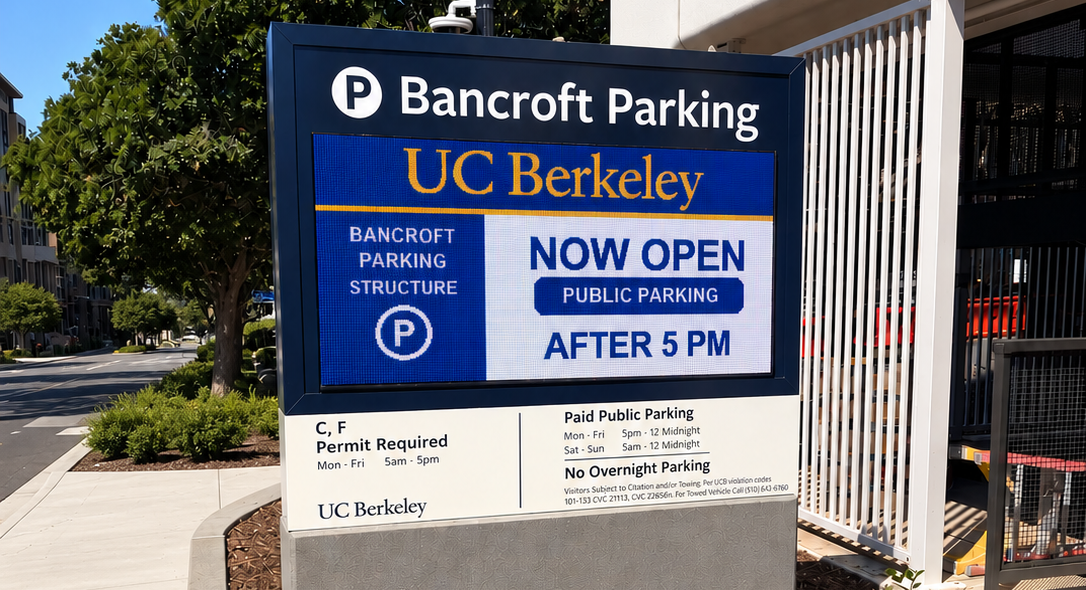
Detection only creates value when drivers receive information where they need it. Real-time parking guidance may include entrance signs, level indicators, aisle signs, monument signs, and variable-message displays.
Additional signage can increase parking guidance system installation cost because each display may require mounting, power, communications, configuration, and programming.
However, signage also delivers some of the clearest parking guidance technology benefits because it transforms occupancy data into useful information. Instead of driving through full levels, parkers can move directly toward areas where capacity remains.
4. Networking and electrical infrastructure
Existing infrastructure can significantly affect project pricing. A modern garage may already have fiber, power, conduit, and network cabinets positioned where parking equipment can connect.
An older garage may require substantial upgrades before a parking lot tracking system can operate reliably. This is one reason similarly sized facilities can receive very different proposals for the same type of automated parking guidance system.
Don’t Forget Software and Long-term Ownership Costs
Hardware is only part of a modern parking system. Effective parking occupancy management depends on software for dashboards, reporting, alerts, system health, user access, historical data, and integrations.
An automated parking guidance system may also connect with parking access and revenue control systems, mobile payments, license plate recognition, security platforms, EV charging equipment, or third-party applications.
EnSight Technologies offers an API-based integration layer alongside occupancy monitoring, signage, license plate recognition, surveillance, and revenue modules. This modular approach allows facility owners to build around their actual operating needs.
When reviewing proposals, ask about:
- Software licensing
- Hosting and data storage
- Maintenance agreements
- Hardware warranties
- Replacement equipment
- Training
- Technical support
- Software updates
- Future integrations
Flexible parking systems provide greater long-term value when new capabilities can be added without replacing the entire platform.
How Should You Compare Parking Guidance Proposals?
Choosing the right parking guidance system means comparing lifecycle value rather than simply selecting the lowest initial bid. Ask potential providers to clearly separate costs for equipment, software, networking, electrical work, signage, installation, maintenance, commissioning, and optional integrations.
A low parking guidance system installation cost may become expensive if unreliable vehicle counts create driver frustration or require constant manual correction. Evaluate every parking lot tracking system against the same operational requirements.
Does the system provide real-time parking guidance at the facility, level, zone, or individual-space level? Can it support parking capacity management across multiple parking assets? Can cameras or parking occupancy sensors be added later?
Can Camera-based Parking Guidance Lower Total Cost?
The economics of an automated parking guidance system depend heavily on how many devices need to be installed. Traditional individual-space systems may involve hundreds or thousands of dedicated devices, while camera-based systems can use strategically positioned cameras to monitor broader areas.
EnSight Technologies describes its approach as “intelligent simplicity,” using fewer components to reduce installation and maintenance requirements while supporting parking occupancy management and real-time parking guidance.
This can make camera-based parking management technology attractive for facilities that want accurate occupancy intelligence without installing a sensor above every standard parking stall. At the same time, flexible parking systems can still incorporate parking occupancy sensors where specialty-space monitoring provides additional operational value.
What Should You Include in a 2026 Budget?
A complete project budget should include detection equipment, digital signs, networking, electrical work, software, commissioning, training, maintenance, and contingency.
Parking capacity management can also be deployed in phases. For example, an owner may begin with entrances, high-demand levels, or areas where drivers experience the most confusion and then expand the parking lot tracking system later.
This scalability is becoming an important part of the future of parking guidance. Owners increasingly want parking management technology capable of growing with additional garages, EV adoption, digital payments, new mobility services, and changing traffic patterns.
Parking Guidance Technology Benefits Go Beyond Finding a Space
Parking guidance technology benefits extend beyond simply showing drivers where spaces are available.
Accurate parking intelligence can:
- Improve parking utilization
- Reduce manual vehicle counting
- Identify peak usage periods
- Improve staffing decisions
- Reduce unnecessary circulation
- Provide historical utilization data
- Support future parking planning
Real-time parking guidance can improve arrival experiences at airports, hospitals, universities, hotels, retail centers, and event venues.
Better parking occupancy management also helps owners determine whether they truly need additional parking capacity or simply need to use their existing inventory more effectively.
The future of parking guidance will increasingly connect occupancy information with payments, license plate recognition, analytics, security, and other operational systems.
Build The System Around Your Facility
There is no one-size-fits-all answer to parking guidance system cost. The correct investment depends on what a facility needs to detect, communicate, integrate, and manage. EnSight Technologies develops scalable parking management technology around accurate occupancy data, real-time parking guidance, and modular parking occupancy management.
By combining the right automated parking guidance system with practical parking capacity management and flexible parking systems, owners can create a smarter parking environment without unnecessary infrastructure.
Ultimately, choosing the right parking guidance system means investing in technology that solves today’s parking challenges while remaining ready for the future of parking guidance.
Frequently Asked Questions
What is the average parking guidance system cost in 2026?
Parking guidance system cost varies widely based on facility size, detection technology, signage, infrastructure, software, and integrations. A single parking structure can cost significantly less than a large multi-garage airport deployment, so a site-specific assessment provides a more useful estimate than a generic price.
What affects parking guidance system installation cost the most?
Parking guidance system installation cost is influenced by device quantities, parking occupancy sensors, signage, electrical infrastructure, networking, mounting requirements, software, and integrations. Existing garage infrastructure can significantly increase or reduce installation requirements.
What are the main parking guidance technology benefits?
Major parking guidance technology benefits include real-time parking guidance, reduced search traffic, better utilization, improved operational reporting, and stronger parking capacity management.
How should I approach choosing the right parking guidance system?
Choosing the right parking guidance system starts with defining accuracy requirements, guidance level, integrations, maintenance expectations, expansion plans, and budget. Owners should compare total ownership costs instead of looking only at the initial hardware price.
Are flexible parking systems better for large facilities?
Flexible parking systems can work especially well for large or growing facilities because operators can combine cameras, parking occupancy sensors, signage, software, and other technologies according to specific operational requirements.
What is the future of parking guidance?
The future of parking guidance includes AI-powered vision, connected software, open APIs, scalable infrastructure, and parking management technology capable of adapting as parking facilities and mobility requirements evolve.