

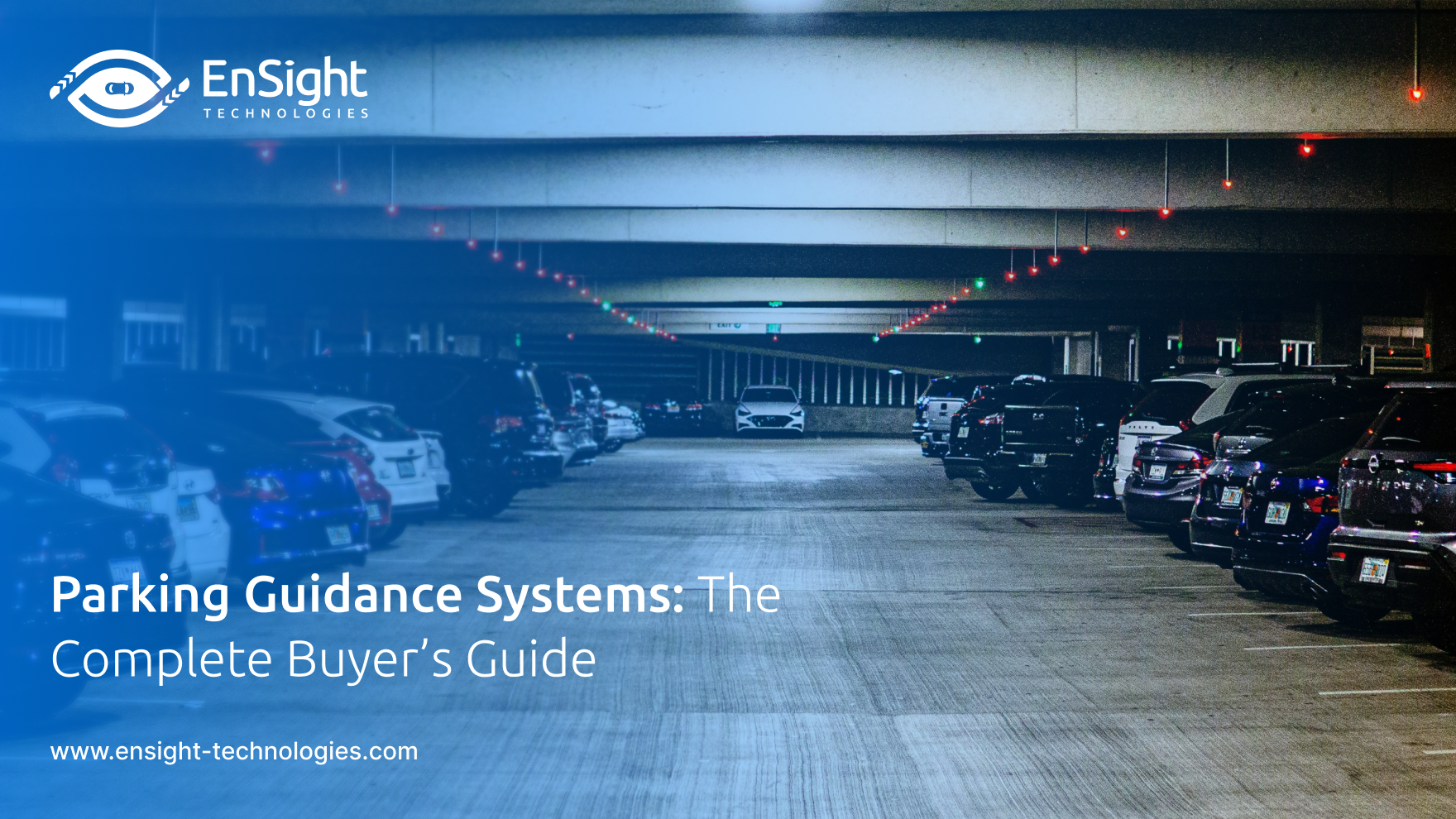
Parking Guidance Systems: The Complete Buyer’s Guide
Choosing a parking guidance system is not simply a hardware decision. The right setup should help drivers find available parking, give operators dependable occupancy data, and fit the way a facility handles access, payments, security, and reporting.
For owners evaluating a car parking guidance system, the challenge is knowing which features will improve operations without adding unnecessary complexity or cost.
A modern parking control system may include cameras, sensors, software, signs, license plate recognition, integrations, and reporting tools. Some properties only need garage-level counts, while others need an automated parking guidance system that tracks levels, specialty spaces, or multiple facilities. The best buying process starts with operational goals.
What Does a Parking Guidance System Do?
At its core, a parking guidance system detects availability and turns that information into useful guidance. A smart parking guidance system may show total capacity at an entrance, direct drivers to open levels, or provide space-level availability in selected areas.
Advanced parking guidance also supports better parking space management by showing how capacity changes by time, location, and user group. When paired with a parking management and guidance system, occupancy data can connect with payments, permits, enforcement, or access control.
This is where an intelligent parking guidance system differs from a basic vehicle counter. It helps operators use occupancy data to improve circulation, planning, and overall parking management.
Start with Your Facility and Its Users
Airports, hospitals, universities, retail centers, office campuses, and mixed-use developments all have different parking needs.
A car parking guidance system for a hospital may need to distinguish between visitor, employee, accessible, and short-term parking. A retail property may instead focus on reducing the amount of time customers spend searching during peak hours.
Commercial properties should also consider commercial parking management requirements such as tenant allocation, visitor access, validations, and reporting. A customized parking guidance system may be useful when a property has unusual traffic patterns, indoor and outdoor parking, or specific signage requirements.
EnSight Technologies says its platform can begin with total garage occupancy and scale to level occupancy, aisle counts, and specialty-space monitoring. It also supports configurable signage and API integrations.
Compare Camera-based and Space-level Detection
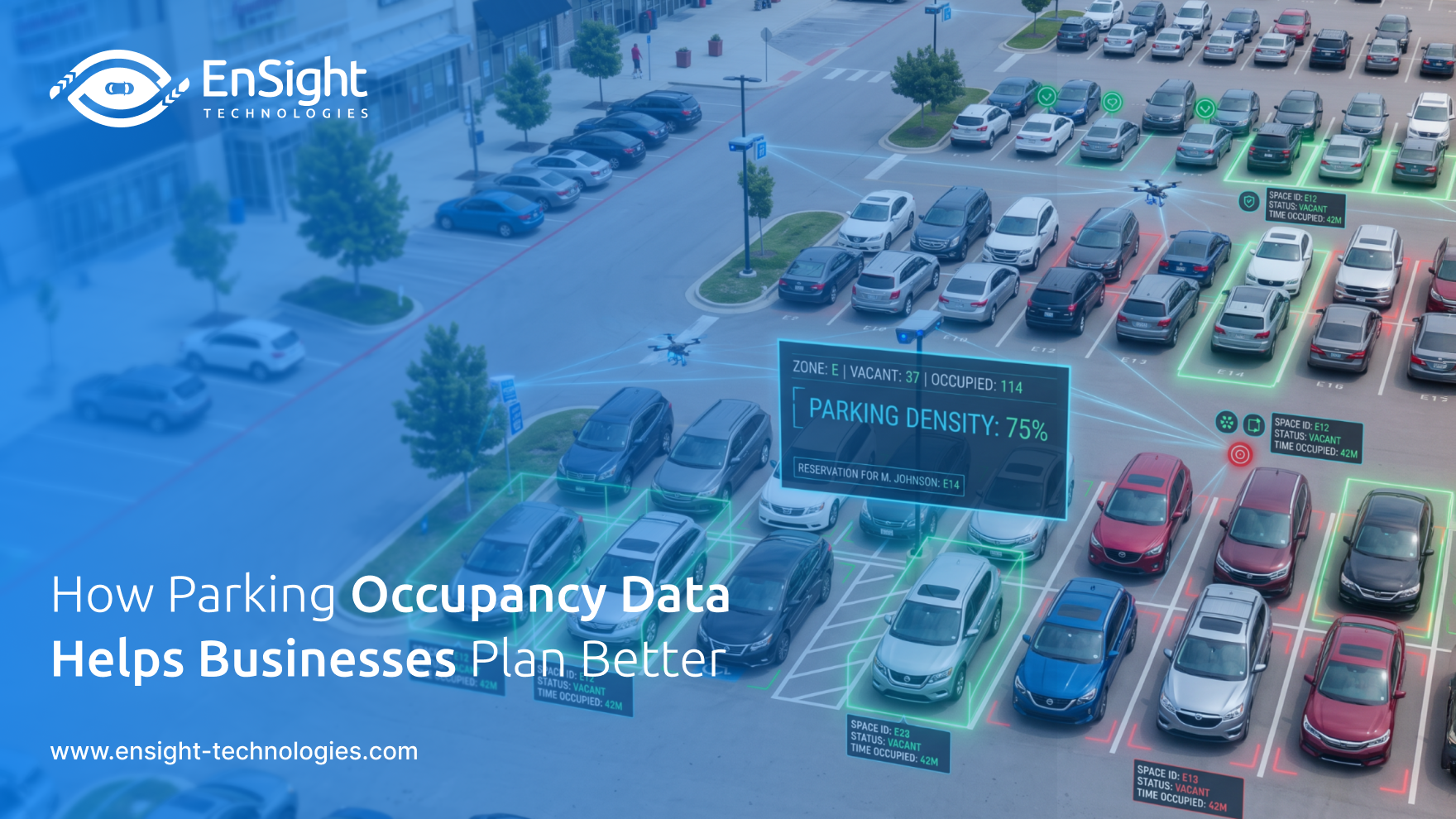
One of the first technology decisions is how vehicles will be detected. Some automated parking system designs rely on devices installed at individual spaces. Others use camera-based machine vision to monitor vehicle movement and occupancy across broader areas.
A camera-based smart parking guidance system can be attractive when a facility wants broad coverage without installing hardware over every standard stall.
EnSight Technologies says EnSight Eyes uses advanced camera sensor technology, machine vision, and neural-network software. The company states that the system provides greater than 99% counting accuracy.
Individual sensors can still be useful where exact stall status matters. A parking space management strategy may use them for accessible parking, EV charging stalls, short-term spaces, or reserved areas. Combining technologies can create advanced parking guidance without installing the same type of hardware throughout the entire property.
Make Signage Part of the Buying Decision
A parking guidance system is only useful if drivers can understand its information quickly. Signs should appear where decisions are actually made, including entrances, ramps, levels, intersections, and major aisles.
A car parking guidance system may use simple parking-count displays, while advanced parking guidance may include dynamic signage with customized information. EnSight offers wired and wireless signage that can be configured for different areas within a facility.
For a customized parking guidance system, ask whether signs can reflect the facility layout, branding, specialty parking rules, and changing operating conditions. Good signage should help drivers make a decision quickly rather than requiring them to interpret complicated information while moving through the facility.
Check Integration Before You Buy
A parking control system should not become another isolated technology platform. Ask how it will communicate with your existing parking access and revenue control equipment, license plate recognition, valet services, EV charging equipment, payment tools, and reporting software.
A parking management and guidance system becomes more useful when these technologies can exchange information. EnSight Connect is designed to integrate with PARCS equipment, LPR, valet platforms, EV charging systems, and other technologies that provide an API.
For commercial parking management, these integrations can reduce duplicated work and provide better visibility into occupancy, access, and revenue activity. They also make an intelligent parking guidance system easier to expand when new technologies are introduced.
Evaluate the Software, Not Just the Hardware
Cameras, sensors, and signs may be the most visible parts of the installation, but software determines how useful the system is for operators. Ask what the parking management platform shows in real time. Review the available historical reports, alerts, user permissions, and system-health information.
An automated parking guidance system should provide more than a current availability count. Good software can support parking space management, occupancy trends, and operational planning.
An automated parking system that retains useful historical data can help teams identify recurring congestion, peak usage, and underused areas. The parking control system should also be easy enough for staff to use consistently. Complex dashboards can reduce the value of otherwise capable technology.
Consider Scalability and Total Ownership Cost
A smart parking guidance system should be able to grow as a property adds parking areas, buildings, EV charging infrastructure, or new user groups.
A customized parking guidance system can be especially useful when expansion will happen in phases. Operators should be able to add cameras, sensors, signage, or software capabilities without replacing the entire platform.
For commercial parking management, buyers should compare lifecycle cost rather than installation price alone.
Consider:
- Hardware and installation
- Software fees
- Networking requirements
- Maintenance and support
- Replacement equipment
- Future integrations
- Expansion costs
A flexible automated parking system can provide greater long-term value when it can adapt to changing operational requirements.
Use a Practical Buyer’s Checklist
Before selecting an intelligent parking guidance system, define what you expect it to accomplish.
Ask potential providers:
- What level of detection accuracy can you deliver?
- Does guidance work at the garage, level, zone, or individual-space level?
- How does the parking management and guidance system handle specialty spaces?
- Can it integrate with existing parking management tools?
- How can the automated parking guidance system expand later?
- What reporting, maintenance, and technical support are included?
These questions make it easier to compare one car parking guidance system with another when the technologies behind them may be very different. They also help distinguish a basic counting product from a complete parking management strategy.
Why a Modular Parking Approach Matters
EnSight Technologies takes a modular approach to parking guidance. Its ecosystem includes EnSight Eyes for vehicle counting, EnSight Spaces for specialty-space monitoring, EnSight Signage, EnSight Connect for API integration, and EnSight Plates for license plate recognition. Revenue and surveillance capabilities can also be added.
This approach can support advanced parking guidance while allowing operators to choose where cameras, individual sensors, signs, or integrations provide the most value.
A strong parking management and guidance system should make parking easier for drivers while giving operators better visibility and control.
Buy for the operation, not just the equipment
The best parking guidance system is the one that fits how your facility actually works. Start with accuracy, user needs, infrastructure, parking space management, integrations, and long-term growth. Whether you need a straightforward parking control system or a broader intelligent parking guidance system, evaluate how well each option supports daily parking management.
A scalable automated parking system and thoughtful commercial parking management strategy can also help protect the investment as operational needs change.
EnSight Technologies can combine an automated parking guidance system, dynamic signage, specialty-space monitoring, software integrations, and a customized parking guidance system design. The goal is a practical parking management and guidance system that gives drivers better information and operators better control.
Frequently Asked Questions
1. What is the difference between a parking guidance system and parking management?
A parking guidance system focuses on detecting availability and directing drivers. Parking management can also include payments, permits, access, enforcement, reporting, and commercial parking management functions. A parking management and guidance system can connect these areas.
2. Is an automated parking guidance system the same as an automated parking system?
Not always. An automated parking guidance system helps drivers locate available parking through detection, software, and signage. An automated parking system can also refer to robotic systems that physically store and retrieve vehicles.
3. What makes a smart parking guidance system smart?
A smart parking guidance system uses real-time data, connected software, and automated detection. An intelligent parking guidance system may also connect with other platforms, classify vehicle activity, and provide deeper operational reporting.
4. When should you choose a customized parking guidance system?
A customized parking guidance system can make sense for unusual layouts, multiple user groups, specialty parking spaces, branding requirements, or complex integrations. It can also support more precise parking space management.
5. What should commercial properties prioritize?
For commercial parking management, prioritize reliable occupancy data, clear driver guidance, integrations, scalability, and reporting. The car parking guidance system should also work with existing access, tenant, visitor, and payment processes.
6. What should buyers ask EnSight Technologies?
Ask EnSight Technologies how the proposed system would fit your traffic patterns, existing infrastructure, required guidance level, integrations, and expansion plans. The right advanced parking guidance design should address operational needs without adding unnecessary hardware.